Christmas miracles pop up every December on TV and in movies…but the events that occurred 100 years ago on December 25, 1914 come about as close as you’ll find in the annals of history. It was the first Christmas of World War I, and hundreds of thousands of lives had already been taken by a war that was just getting started. Along the Western Front, the fighting had settled into the dreary form of trench warfare that would define the war for future generations. Young men faced the prospect of a holiday away from loved ones, with the guns of war blaring all around. But then, in places all along the Western Front, the guns fell silent.
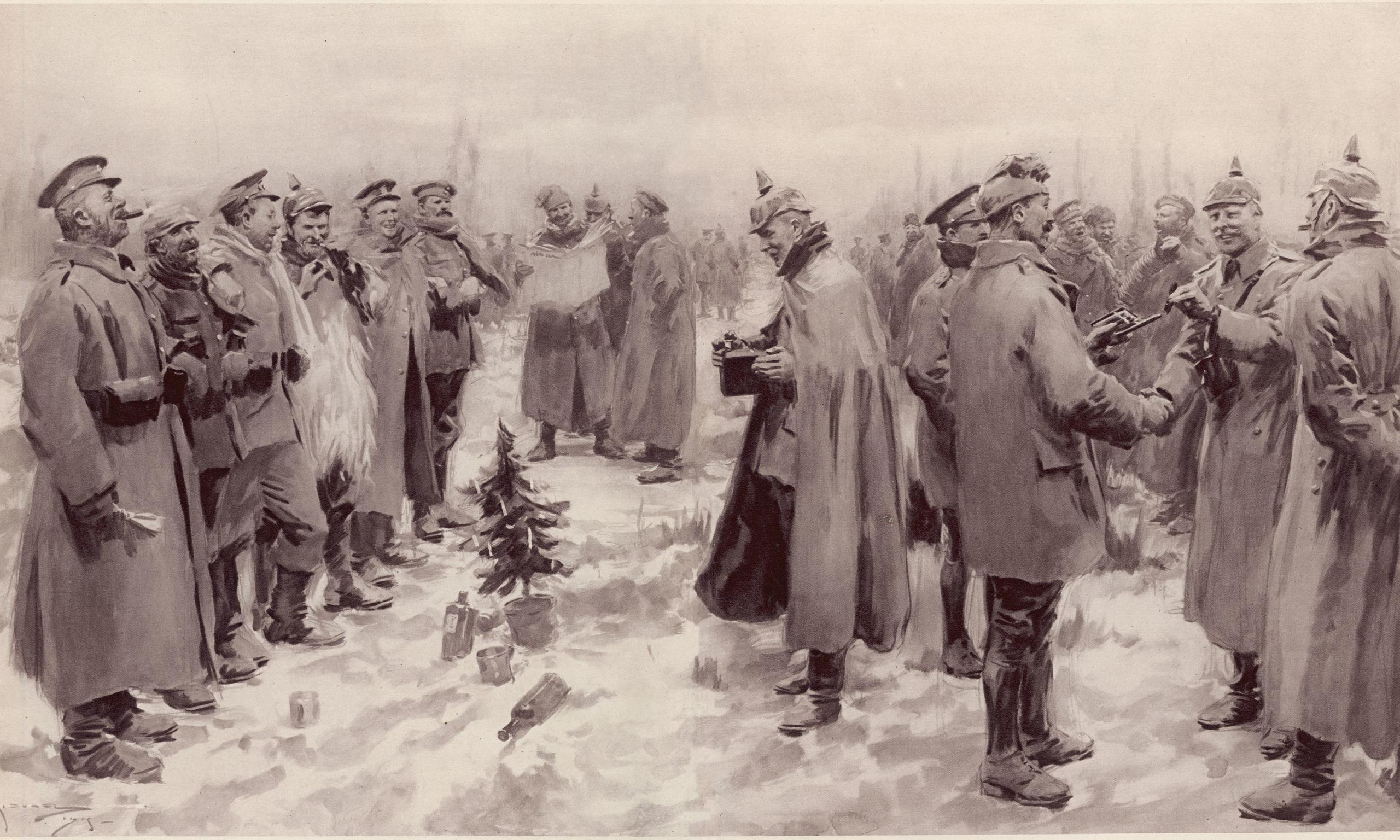
To be clear, there was no official truce by either side. But all along the front, men just stopped fighting. In some places, it began on Christmas Eve, with German and British voices volleying Christmas carols across the muck, corpses, and barbed wire of No Man’s Land separating the trenches. (The Germans sang “Stille Nacht,” and the Brits responded to the same tune with “Silent Night.”) German troops lit small Christmas trees with candles (a tradition with deep German roots), while Allied lookouts peered over the parapets and wondered what was happening.
On Christmas morning, German troops stepped warily toward Allied positions yelling “Merry Christmas” in English. And while many suspected a trap, other British, French, and Belgian troops walked out to meet their enemies. Gifts were exchanged -- German beer and sausage for English plum pudding, along with tobacco, hats, and pins – and a number of impromptu soccer games broke out. No one knows exactly how many troops decided to lay down their arms that holiday, but the best guess is that 100,000 soldiers celebrated Christmas with men they had previously been (and would soon return to) trying to kill.
Touching as this scene is, it should be placed in context. World War I would drag on for another four years, snuffing out millions of lives. It seems almost certain that some of the soldiers who had exchanged presents or played soccer together died at one another’s hands in the days that followed. (At least two men were killed during the unofficial truce itself.) And ensuing Christmases (as well as other holidays, like Easter) would never see a spontaneous outbreak of peace along the front lines to the extent of Christmas 1914. The officers on both sides saw the “live and let live” attitude that developed among men who fought in close quarters to the enemy, and did their best to snuff it out, sending out strict orders against fraternization. The war itself also extinguished many of the brotherly feelings combatants might have felt in 1914. As the war dragged on, more and more vicious means of attacking (like mustard gas) made the idea of truce impossible.
What we’re left with is one holiday celebration a century ago fueled by men dreaming of Victorian era Christmases back in London and Berlin, and doing their best with what they found in the blood and mud covering the ground in Flanders. In the middle of the bloodiest conflict the world had seen up to that point, history records a genuine outbreak of peace on Earth, good will toward men. Christmas may not be able to work miracles, but you’d be hard pressed to find a day that’s come any closer than that.
 |
| http://upload.wikimedia.org/wikipedia/en/4/42/Illustrated_London_News_-_Christmas_Truce_1914.jpg |

No comments:
Post a Comment