Alfred Nobel was given one of the rarest opportunities: The chance to read his own obituary. It was a mistake, of course. In 1888, Nobel’s older brother Ludvig died, and a French newspaper mistakenly believed it was Alfred Nobel himself, a Swedish chemist and prolific inventor who invented dynamite. Their chosen headline: “The Merchant of Death is Dead.”
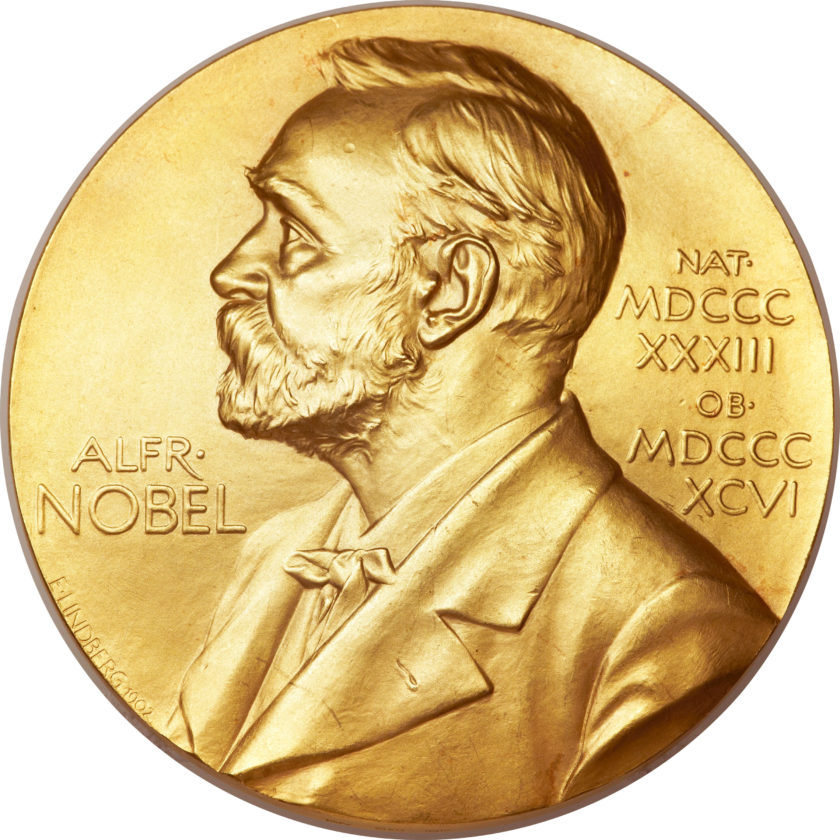
When Nobel read the headline, he was deeply unsettled about how he would be remembered when his time was truly up. It bothered him so much that he changed his will, providing for a series of awards for those who conferred the “greatest benefit on mankind” in a series of fields, to be funded by his considerable fortune. On this date in 1896, Death came calling for Alfred Nobel in earnest. And 113 years ago today, on December 10, 1901 – the fifth anniversary of his death -- the first Nobel prizes were awarded.
From the beginning, the Nobel prize has been presented in five categories: physics, chemistry, physiology or medicine, literature, and peace. (A Nobel Memorial Prize in Economic Sciences was added in 1968.) The awards are frequently presented on this date, and several notable winners have accepted their prizes on December 10, including Theodore Roosevelt (the first American winner) in 1906; Selma Lagerlöf (the first female writer to win the literature award) in 1909; the International Red Cross in 1917 (the first peace prize recipient in three years as World War I raged); Woodrow Wilson in 1920; Ralph Joseph Bunche (the first black recipient) in 1950; and Menachem Begin and Anwar Sadat in 1978.
Like with any high-profile award, the Nobel committees (there are four presenting organizations in Sweden and Norway) have had their share of misses. The 1926 medicine award went to a Danish physician who claimed to have discovered a parasite that caused cancer. (Nobel prizes for scientific discoveries have adopted tighter standards since.) The most high-profile arguments have probably been around the peace prize, though. Henry Kissinger’s award while the Vietnam War was still underway caused two committee members to resign. Barack Obama’s peace prize while he was still trying to dent the cushion in his White House chair five years ago was a head-scratcher, including to Obama himself.
But the biggest Nobel whiff is probably who didn’t get the award. Mahatma Gandhi was nominated at least five times, but never received the peace prize. The Nobel Committee secretary said in 2006 that it was the biggest omission in the award’s history, noting “Gandhi could do without the Nobel Peace prize. Whether [the] Nobel committee can do without Gandhi is the question." When Gandhi was assassinated in 1948, the Nobel Committee didn’t award a peace prize, claiming that there was “no suitable living candidate.”
 |
| http://www.skeptical-science.com/wp-content/uploads/2014/10/Nobel-Prize.jpeg |

No comments:
Post a Comment