AWC is classing up the joint today. Pyotr Tchaikovsky might have had mixed feelings when he read the reviews of his double-bill from critics who visited the Mariinsky Theatre in St. Petersburg 122 years ago on December 18, 1892. Reaction to the final opera by the famous Russian composer, a one-act production called “Iolanta,” was quite favorable. But reviews were more divided about the ballet he had scored that night, a two-act production whose title translated into English as “The Nutcracker.”
Tchaikovsky had been commissioned to compose an opera-ballet production (the equivalent of a double feature in those days) after his success with “The Sleeping Beauty” two years earlier. For the ballet portion, he decided to adapt “The Nutcracker and the Mouse King,” which had been around since 1816. Reaction to his music was favorable, with critics calling the score “beautiful,” “melodious,” and “astonishingly rich.” The dancing, choreographed by Marius Petipa and Lev Ivanov, came in for harsher treatment. Critics complained that the actress portraying the Sugar Plum Fairy was too fat, the battle scene was too confusing, the ballerina didn’t dance until the second act was almost over (and It was almost midnight at the theater), and most especially that children were far too prominent. Tchaikovsky preserved some of the music by extracting a 20-minute suite from the production, but it looked like the ballet was best left forgotten.
Things changed slowly in the 20th century. Alexander Gorsky staged a new version in Russia in 1919, making his own changes (most notably getting rid of the kids). By casting adult dancers for Clara and the Prince, Gorsky introduced a romantic angle into the story. He also began a tradition of adaptation that has followed “The Nutcracker” since, with many productions containing alterations by individual choreographers putting their own stamp on the proceedings. The ballet spread to England and the United States, and gained popularity toward the middle of the 20th century.
It might be a bit cliché, but “The Nutcracker” finally hit it big when it made it to New York. George Balanchine choreographed a version for the New York City Ballet that debuted in 1954. It was a smash hit, and has been performed every year since. This was also the version that brought the ballet to TV, with live broadcasts from New York in 1957 and 1958. (It was broadcast again in 2011.) Today “The Nutcracker” is a staple for ballet troupes during the holiday season (like the Colorado Ballet, seen here). It’s been estimated that 40% of the revenues for major American ballet companies come from “The Nutcracker.”
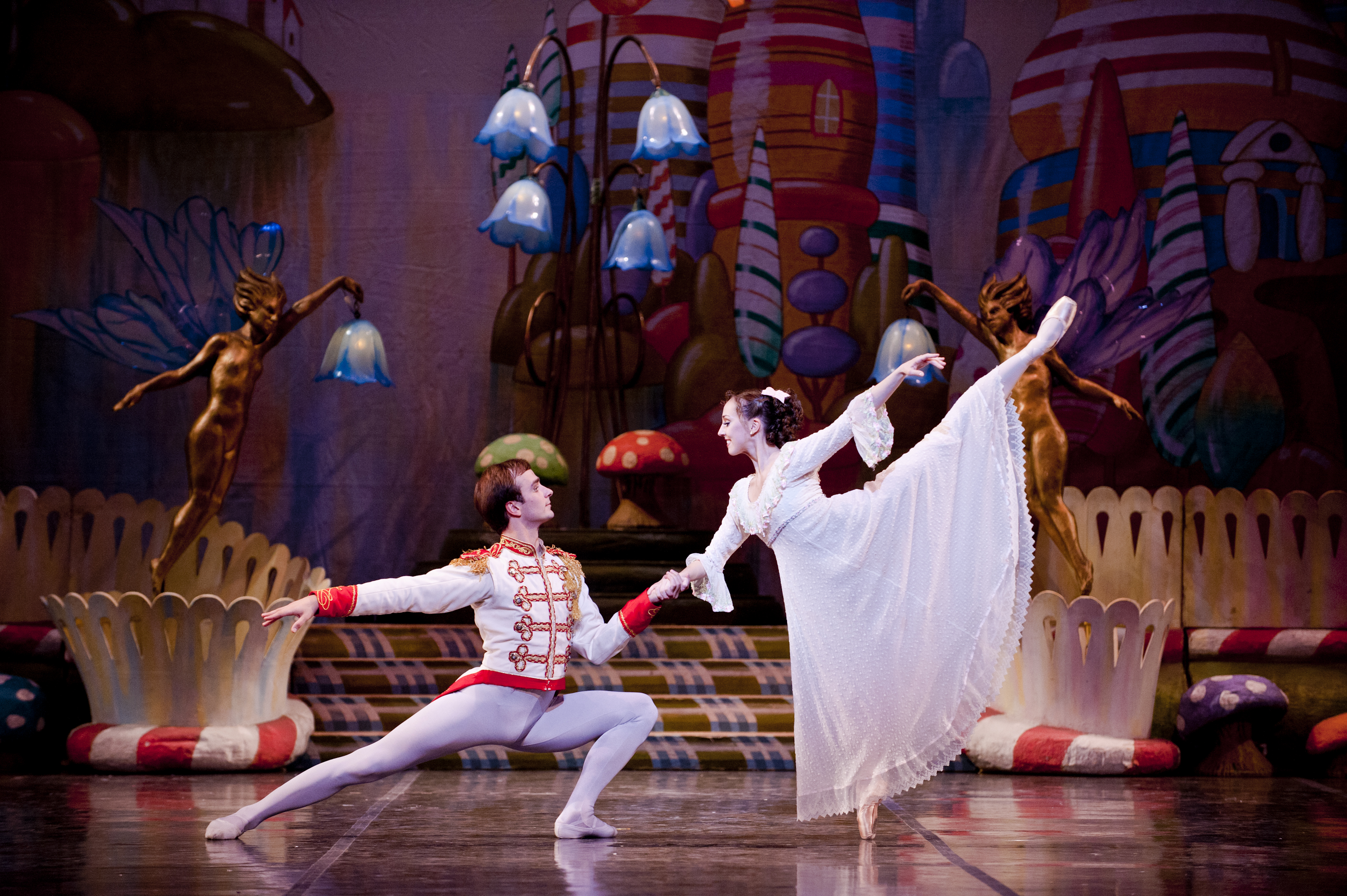 |
| http://catchcarri.com/wp-content/uploads/2011/12/dana-benton-and-viacheslav-buchkovskiy-in-colorado-ballet_s-the-nutcrackerat-the-ellie-caulkins-opera-house-photo-by-terry-shapiro.jpg |

No comments:
Post a Comment