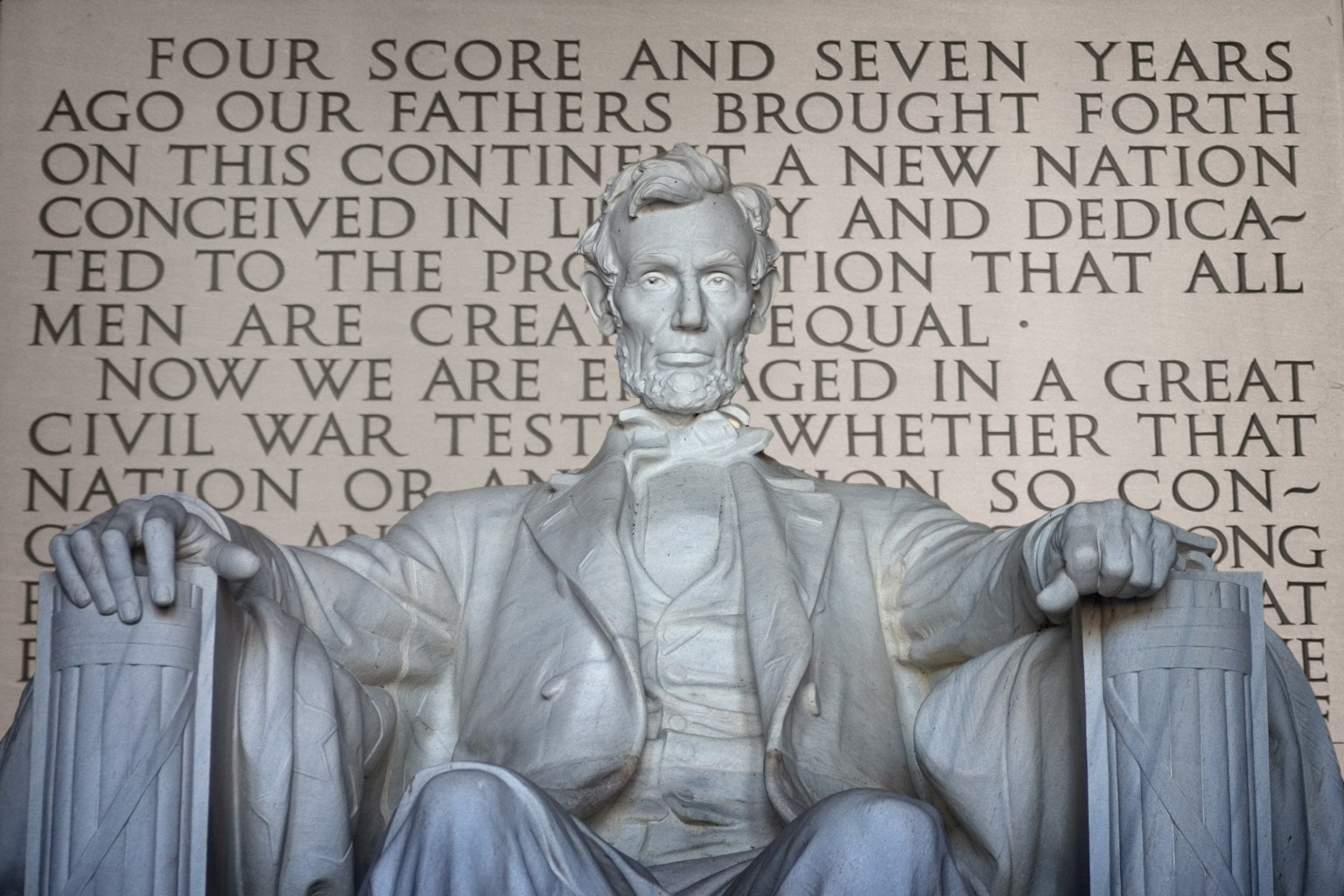
When he delivered his two-minute address to dedicate the military cemetery at Gettysburg, Pennsylvania, seven-score and eleven years ago (that’s 151) on November 19, 1863, Abraham Lincoln said “The world will little note, nor long remember what we say here.” It was one of the worst predictions ever made.
The Battle of Gettysburg had killed or wounded around 35,000 Americans, split almost equally between North and South. What could Lincoln say tojustify this carnage, and encourage people to go on? With the Gettysburg Address, a war that had been waged on the slippery idea of “Union” found more solid, and enduring, justification. Did Lincoln’s founding summary “conceived in liberty, and dedicated to the proposition that all men are created equal,” actually mean what it said? If so, the Union cause had no greater foundation.
Lincoln’s evolving justification for the war…from a more abstract concern for holding the nation together to a rejection of the slave economy that had proved the greatest single threat to that union…is encapsulated at Gettysburg. It’s the difference between being a memorable wartime president, and having a monument in your name.
Worth noting is that not everyone realized the lasting power of Lincoln’s words at the time. The Chicago Times (which opposed Lincoln politically) derided the speech as “silly, flat, and dishwatery.” But Lincoln’s counterpart at the Gettysburg cemetery that day saw it differently. Lincoln had only been invited to the dedication as an afterthought. The keynote speaker was the noted orator Edward Everett, who spoke for two hours prior to Lincoln’s address. Afterward, Everett approached the president and said "I should be glad if I could flatter myself that I came as near to the central idea of the occasion, in two hours, as you did in two minutes."
 |
| http://i.huffpost.com/gen/1224920/thumbs/o-GETTYSBURG-ADDRESS-facebook.jpg |

No comments:
Post a Comment