By 1922, Howard Carter was getting desperate. The British archaeologist had spent a decade in Egypt’s Valley of the Kings looking for the legendary tomb of King Tutankhamun, lost for more than 3,000 years. But his wealthy benefactor was getting impatient and warned Carter that he was pulling his funding at the end of the season. Time and money were running out.
And then, 92 years ago, the breakthrough Carter and his crew had hoped for finally arrived. The men found a set of steps on November 4, 1922, and began their excavation. Three weeks later, Howard Carter entered the long-lost tomb of King Tut…the best preserved pharaoh’s tomb ever found in the Valley of the Kings. Carter’s first look at the tomb was lit by a candle after he breached a corner of the doorway with a chisel. With his benefactor, Lord Carnarvon, over his shoulder, he saw a room filled with gold and ebony treasures. “Can you see anything?” Carnarvon asked, and Carter replied “Yes, wonderful things!”
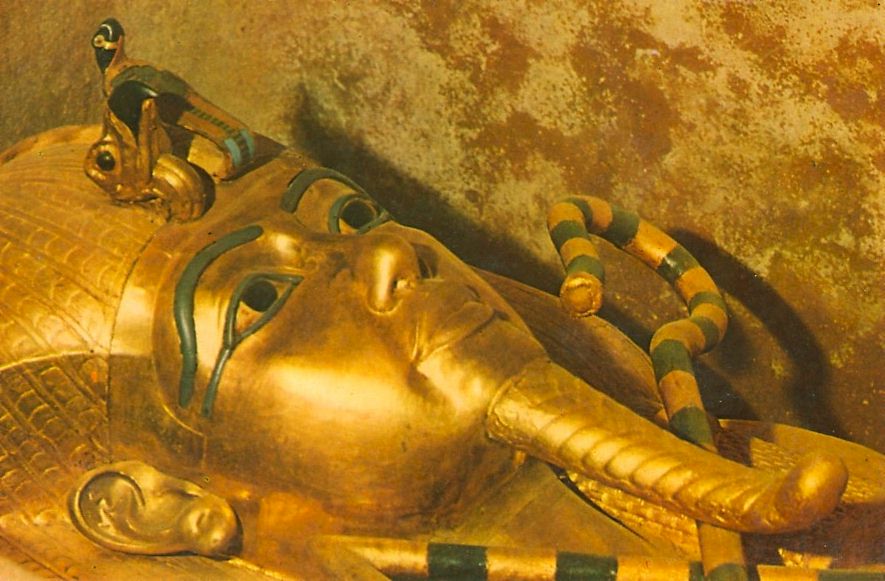
His crew spent months cataloging those wonderful things, and in February 1923, Carter finally found the sarcophagus of King Tut, known as the “boy king,” who took the throne around age 9 and died about a decade later, in or around 1323 BC. The gold coffin containing his mummy was nested inside two others, and his golden burial mask became the symbol for a revival of interest in ancient Egypt. As for Tutankhamun himself, the unfortunate boy-king most likely suffered from a degenerative bone disease, which probably combined with malaria to kill him as a teenager. Many of the treasures excavated from King Tut’s tomb have toured the world and are now housed at Cairo’s antiquities museum. As one author put it, “The pharaoh who in life was one of the least esteemed of Egypt's Pharoahs has become in death the most renowned."
 |
| http://www.comeseeegypt.com/images/tut.jpg |

No comments:
Post a Comment