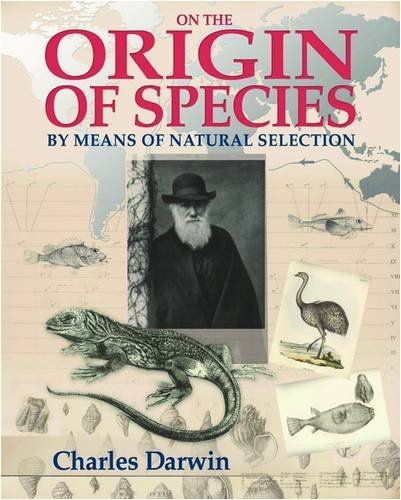
When Charles Darwin published “On the Origin of Species” 155 years ago on November 24, 1859, he unwittingly set in motion a neat case study of the very process he was arguing for. The idea that forms of life developed over time wasn’t new, and Darwin drew on work going back to the ancient Greeks in presenting his theory of evolution by natural selection, which he had honed for nearly a quarter century since observing the variability of finches in the Galapagos Islands in 1835.
Darwin’s problem was that, while scientists were ready to accept much of what he wrote about the evolution of life forms, they didn’t find his chosen mechanism of natural selection convincing. By the 1870s, a range of theories were commonly accepted explaining the development of species, including the idea that major evolutionary “leaps” happened all at once instead of over time.
It would take longer than Darwin’s lifespan for his theory to be validated. Advances in gene theory, the fossil record, and the dating of the Earth’s age all caused scientists to take a fresh look at Darwin’s idea that small changes served to make some creatures more suitable to their habitats, compounding over unfathomable time to result in major differences and give us what we call different species. As the theory best suited to the evidence of the natural world, evolution by natural selection had changed over time and outlasted its competitors...an interesting feat of selection in its own right. (In a neat coincidence, the hominid skeleton named “Lucy,” which added significantly to the fossil record connecting humans with apes, was discovered in Ethiopia on the 115th anniversary of Darwin’s publication on November 24, 1974.)
Today Darwin’s theory is universally accepted among biologists. Its only real resistance is found among those who embrace the Genesis creation account, but this hasn’t always been the case. In Darwin’s own time, he met little resistance based on a literal reading of Genesis, which was uncommon in early Christianity. Instead, religious objection tended to center on ideas derived from natural theology. The Vatican called a kind of truce with evolution in 1950, declaring that it is not inconsistent with Catholic beliefs. Religious thinkers have accepted or fought evolution in a variety of ways, based on wide-ranging interpretations of theology and nature. In a way, this range of ideas is itself something Darwin might have recognized and appreciated, while saying “May the best survive.”
 |
| http://i00.i.aliimg.com/photo/v0/111680192/On_the_Origin_of_Species_Book_Charles.jpg |

No comments:
Post a Comment