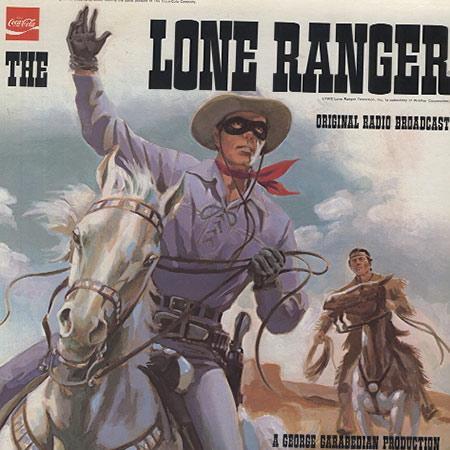
What can be asserted with much more authority is that kids (and yes, adults) ate this stuff up, and the Lone Ranger took off like gangbusters in his time. There was the radio show, of course, which lasted nearly 3,000 episodes and spread from Detroit across the fruited plain along two radio networks. Then there were movie serials, comic books, full-length movies, and one of TV’s earliest hit shows, which ran from 1949-1957. Marketers were happy to leverage the craze into toy guns, costumes, badges, cereal boxes, and whatever else they could put the character on (including an “Atom Bomb Ring” with an actual sample of radioactive material inside, which amazes me on multiple levels).
For over 20 years, the Lone Ranger was a steady presence in American media and merchandising. And then…he wasn’t. You can’t just blame his disappearance on the fact that the character is really old. Batman is only six years younger than the Lone Ranger, and he might as well have been created yesterday. But where Batman’s urban roots allowed him to change with the times, the Lone Ranger was more or less stuck, not just in the romantic legends of the Old West but in a time when outlaw heroes had perfect grammar and never swore. (Having Tonto around with all that “Kemosabe” and “get-em-up, Scout” business also became a really tough sell over time.) There were efforts to bring him back in the ‘80s. Gore Verbinski made a game effort to revive the character two years ago, but couldn’t even bring himself to let him yell “Hi-yo, Silver, away!” without turning it into a Johnny Depp joke.
It might be in the Lone Ranger’s DNA to resist revival. The hero who wears a mask and sells tons of plastic crap is still very much alive, but so much else about him has been left behind by the culture. Something about him still lives every time Robert Downey hides behind the Iron Man mask. (As the fictional great-uncle of the Green Hornet, the Lone Ranger’s connection to urban masked crimefighters was even made explicit in his own time.) But something else about him is still back there on the empty plain, when we still called people “Indians” without a hint of self-consciousness. And then another part of him is forever tied to the middle of the last century, when cigarette ads were everywhere but don’t curse in front of the kids, please. He just doesn’t fit too well in our time. But he couldn’t have been better suited to his.
 |
| http://store.acousticsounds.com/images/large/UMAR_590__22183__10252010052133-661.jpg |

No comments:
Post a Comment